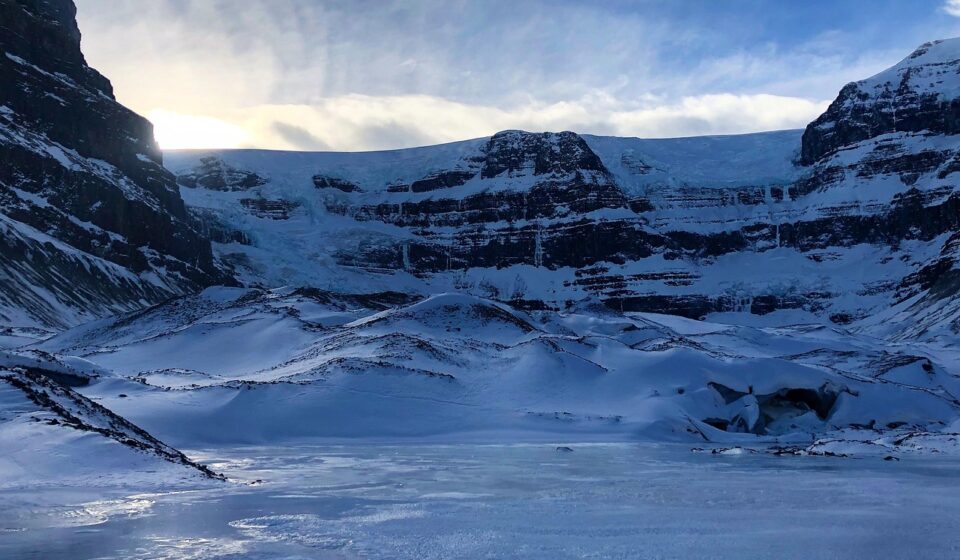

When we talk about the country with the most glaciers in the world, Canada is one of the most important countries to mention. Canada has the largest glacier-covered area among countries, with glaciers and icefields covering roughly 200,000 square kilometres. It also contains about 20% of the world’s glacier ice volume.
But why does Canada have so much glacier ice? The answer is a combination of its huge land area, northern location, high mountains and extremely cold Arctic climate.
Why Does Canada Have So Many Glaciers?
Canada is the second-largest country in the world by land area and stretches far into the Arctic. Its geography provides ideal conditions for glaciers to form and survive.
1. Huge Arctic Region
A major reason is Canada’s vast Arctic territory. The Canadian Arctic Archipelago contains enormous areas of permanent snow and ice. Canada’s Arctic glaciers alone cover approximately 146,000 square kilometres, according to Canada’s 2026 climate report.
The islands of Ellesmere, Devon, Baffin and Axel Heiberg are particularly important glacier regions.
2. High Mountain Ranges
Western Canada has several major mountain systems, including the Rocky Mountains, Coast Mountains and St. Elias Mountains.
High mountains receive heavy snowfall at higher elevations. When snow accumulates for many years and becomes compressed under its own weight, it eventually forms dense glacier ice.
3. Very Cold Climate
Temperature is another major factor. Northern Canada experiences long, extremely cold winters. In high-altitude and Arctic regions, temperatures remain low enough for snow and ice to survive for many years.
This allows glaciers to maintain large quantities of ice, although many Canadian glaciers are now losing ice because of rising temperatures.
How Much Glacier Ice Does Canada Have?
Canada’s glaciers and icefields cover approximately 200,000 square kilometres, although estimates can vary depending on how glaciers and icefields are mapped and classified. Natural Resources Canada has also noted that there is no single reliable current figure for the total number of individual glaciers in the country.
This is important because saying that Canada has the “most glaciers” can be misleading if we mean the number of individual glaciers. The stronger and better-supported fact is that Canada has one of the world’s largest areas of glacier ice and approximately 20% of global glacier ice volume, excluding the Greenland and Antarctic ice sheets in some comparisons.
Where Are Canada’s Glaciers Found?
Canada’s major glacier regions include:
- Canadian Arctic Archipelago
- Rocky Mountains
- Coast Mountains
- St. Elias Mountains
- Baffin Island
- Ellesmere Island
- Devon Island
- Axel Heiberg Island
These glaciers feed rivers and lakes and act as natural freshwater storage systems.
Why Are Glaciers Important?
Glaciers are much more than beautiful frozen landscapes. They store freshwater and release meltwater into rivers and ecosystems.
During warmer periods, glacier melt can contribute to downstream water supplies. Glaciers also influence mountain ecosystems, biodiversity and landscapes.
However, glaciers are changing rapidly. Canada’s 2026 climate report says glaciers in western Canada could lose a very large share of their historical ice volume by 2100 under continued warming.
Interesting Glacier Fact
There are estimated to be around 198,000–200,000 glaciers worldwide, covering roughly 700,000 square kilometres of land. Canada alone contains an enormous share of the world’s glacier ice.
This makes Canada one of the most important countries for studying glaciers, freshwater and climate change.
Conclusion
So, which country has the most glaciers in the world? Canada is best described as the country with the largest glacier-covered area, rather than simply saying it has the highest number of individual glaciers. Its enormous Arctic territory, high mountain ranges, heavy snowfall and cold climate have created ideal conditions for large amounts of glacier ice.
But Canada’s glaciers are also changing. Their future is closely connected to global warming, freshwater resources and the health of mountain and Arctic ecosystems.
Quick Facts
Country: Canada
Glacier-covered area: Approximately 200,000 km²
Share of global glacier ice volume: About 20%
Major glacier regions: Arctic Canada and Western Canada
Main reasons: Large Arctic territory, high mountains, heavy snowfall and cold climate