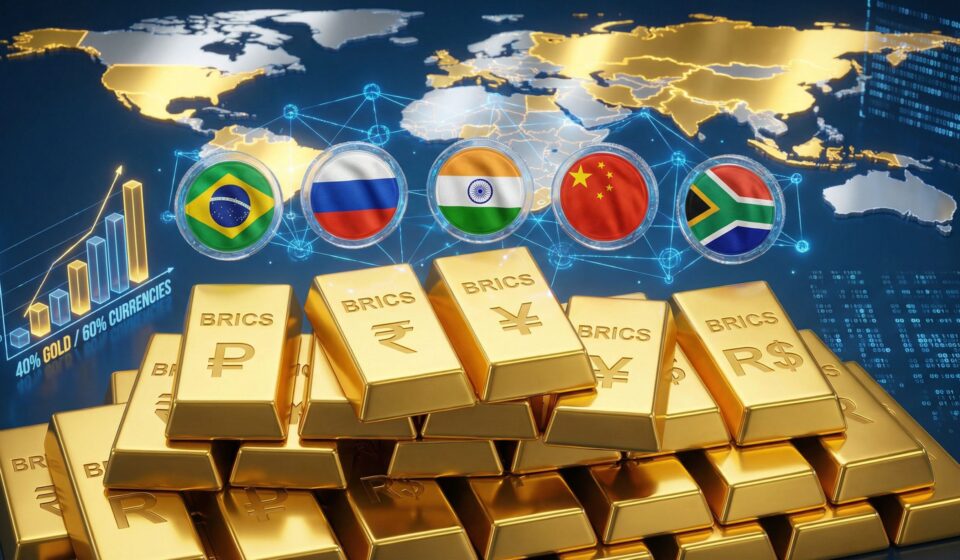

When India trades with Russia, China or other BRICS countries, BRICS trade without US dollar can be possible through local currencies. Instead of every international payment using the dollar as a middle currency, some transactions can be settled through arrangements involving currencies such as the Indian rupee and Russian ruble.
Why Is the Dollar Used?
The US dollar is widely used in international trade because companies, banks and financial markets around the world already accept and hold it.
Imagine an Indian company selling goods worth ₹1 crore to a Russian customer.
A traditional payment route could involve:
Indian Rupee → US Dollar → Russian Ruble
The dollar works as a common bridge between two currencies.
But exchanging currencies can involve fees and exchange-rate risks.
That raises a simple question:
Why not use the rupee and ruble directly?
How Can Local-Currency Trade Work?
In some arrangements, companies can settle trade using their own national currencies.
For example:
Indian company
₹ Rupees
↓
Indian bank
↓
Cross-border payment arrangement
↓
Russian bank
↓
₽ Rubles
Russian company
The exact process depends on the banks, regulations and payment arrangements between the two countries.
So it is not simply a matter of sending physical rupees to Russia. Banks and financial institutions still have to process and settle the transaction.
Does BRICS Have Its Own Currency?
No.
This is an important point.
BRICS does not currently give ordinary businesses a single universal “BRICS currency” that they can use everywhere.
The idea being discussed is broader: making trade and payments in local currencies easier and increasing alternatives to relying entirely on the US dollar.
For example, an Indian business could potentially have more options when trading with another participating economy.
Why Could This Matter to Businesses?
Local-currency settlement could provide businesses with additional choices.
For example, an exporter might benefit from:
- More ways to receive international payments
- Less dependence on one foreign currency
- Potentially fewer currency conversions
- Better management of currency risk
However, local-currency trade is not automatically cheaper.
Businesses still need to consider exchange rates, bank charges, liquidity and regulations.
Does This Mean the Dollar Will Disappear?
Definitely not.
The US dollar remains extremely important in global trade and finance.
A company may continue using dollars because its customer or supplier prefers them, its bank provides better dollar services, or it needs dollars for another international payment.
Therefore, the more realistic idea is not:
“BRICS will replace the dollar.”
It is:
“Businesses could have more choices.”
A Simple Example
Suppose an Indian textile company exports clothing to Russia.
Instead of automatically using:
₹ → $ → ₽
a suitable local-currency arrangement could allow the transaction to be settled more directly between the rupee and ruble.
This could reduce dependence on the dollar for that particular transaction.
But the banks still need a mechanism to determine the exchange rate and complete the settlement.
What Is the Bigger BRICS Idea?
The financial goal is mainly about diversification and alternatives.
Instead of every international transaction depending on one major currency, countries can explore different payment and settlement options.
For businesses, that could eventually mean:
More currencies + more payment options + more financial choices
rather than one system replacing another overnight.
The Bottom Line
Can BRICS trade without the US dollar?
Yes, some transactions can be conducted using local currencies, depending on the countries, banks and financial arrangements involved.
But BRICS is not creating a magic payment system that makes the dollar unnecessary.
The more realistic change is that international businesses may gradually get more choices in how they pay, receive money and manage currency risk.
The dollar may remain a major global currency—but it may not need to be involved in every transaction.
Read next: How BRICS Local Currency Trade Could Change International Business