
Why is the US dollar used around the world? The answer is not simply because the United States is powerful. Its global role developed through American economic strength, World War II, the Bretton Woods system, gold, international trade and the growth of global financial markets.
Before the Dollar, the Pound Was Powerful
The US dollar was not always the world’s leading international currency.
For much of the 19th and early 20th centuries, the British pound was extremely important in international trade and finance.
London was a major global financial centre, and the British Empire had extensive trading connections around the world.
But the economic balance began changing.
The United States became increasingly powerful as an industrial and financial economy.
The Rise of the United States
During the late 19th and early 20th centuries, the US economy expanded rapidly.
American industries produced huge quantities of:
- Steel
- Machinery
- Oil
- Agricultural products
- Manufactured goods
The United States also accumulated significant financial strength.
As American economic influence increased, the dollar became increasingly important in international finance.
World War II Changed the Financial System
The biggest turning point came near the end of World War II.
In 1944, representatives from many countries met at Bretton Woods, New Hampshire, to design a new international monetary system.
The system connected many currencies to the US dollar, while the dollar itself was linked to gold at a fixed rate.
This gave the dollar a central position in international finance.
Why Was the Dollar at the Centre?
There was a practical reason.
After World War II, the United States had enormous economic and industrial strength.
Much of Europe had been devastated by the war, while the US economy remained comparatively strong.
The United States also held a large share of the world’s monetary gold reserves.
This helped establish confidence in the dollar.
As international trade expanded, the dollar became increasingly useful as a common currency for transactions between countries.
What Happened to the Gold Link?
The Bretton Woods system eventually faced serious pressure.
In 1971, President Richard Nixon ended the US government’s convertibility of dollars into gold for foreign official holders.
The dollar was no longer directly tied to gold in the way it had been under Bretton Woods.
But something surprising happened.
The dollar did not disappear from international trade.
Instead, it remained deeply embedded in the global financial system.
Why Did the Dollar Remain Important?
Once a currency becomes widely used, replacing it becomes difficult.
Imagine thousands of companies, banks and governments already:
- Hold the currency
- Trade in the currency
- Borrow in the currency
- Invest in assets denominated in the currency
- Keep reserves in the currency
They have a strong reason to continue using it.
This creates what economists often describe as a network effect.
The more people use a currency, the more useful it becomes to others.
The Dollar as a Global Trade Currency
Suppose an Indian company wants to buy a product from a company in another country.
The two companies could potentially use their own currencies.
But if there is not enough liquidity or a convenient direct currency market, the dollar can act as an intermediary.
For example:
Indian Rupee → US Dollar → Foreign Currency
This makes the dollar a common bridge between different economies.
Oil Also Strengthened Dollar Demand
Another important factor was the role of the dollar in global commodity markets.
Oil became particularly important.
A large amount of international oil trade has historically been priced and settled in US dollars.
That means countries importing energy may need access to dollars to conduct those transactions.
This helped reinforce international demand for the currency.
However, the dollar’s global role cannot be explained by oil alone.
Its position also depends on the size of the US economy, financial markets, banking infrastructure and international confidence.
Why Do Countries Hold Dollar Reserves?
Central banks hold foreign-exchange reserves for several reasons.
These reserves can help countries:
- Pay for imports
- Support financial stability
- Manage foreign payments
- Meet external obligations
- Respond to economic shocks
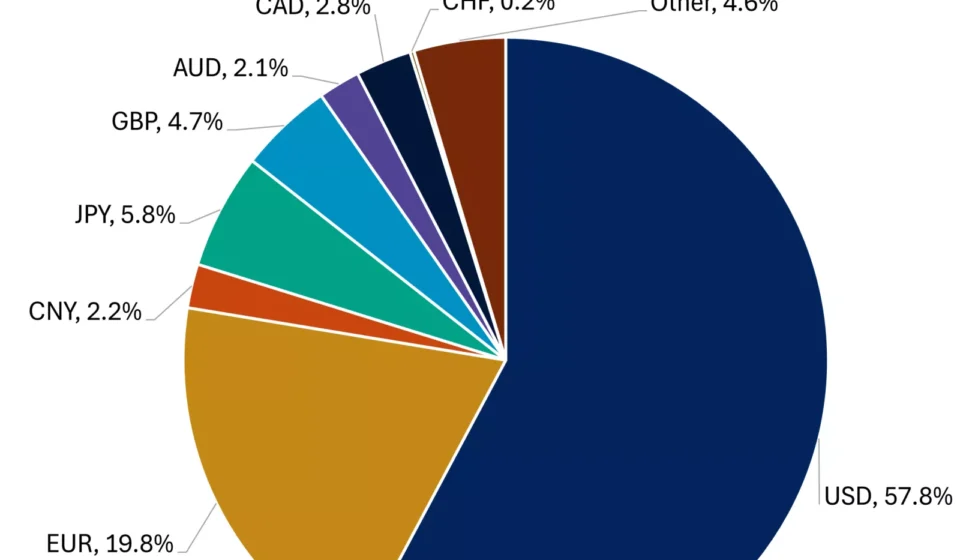
The dollar has traditionally been one of the most important reserve currencies.
That gives it another advantage: governments themselves create ongoing demand for dollar-denominated assets.
Why Is the Dollar Difficult to Replace?
A country does not become a global currency simply by having a large economy.
A widely used international currency needs:
Large financial markets + liquidity + trusted institutions + global accessibility + widespread usage
The US has developed all of these to a significant degree.
This makes replacing the dollar extremely difficult.
A competing currency would need not only economic strength but also a financial system capable of supporting enormous amounts of international trade and investment.
Could BRICS Reduce Dollar Dependence?
This brings us back to BRICS.
BRICS countries have shown growing interest in using local currencies for some international transactions and improving cross-border payment arrangements.
That could reduce the need for dollars in some transactions.
But that is very different from replacing the dollar throughout the global economy.
The key question is not simply:
“Does another country have a currency?”
The bigger question is:
“Can businesses, banks and governments use that currency easily across the world?”
The Future May Be More Diverse
The international monetary system does not necessarily have to be controlled by only one currency.
Businesses can use different currencies for different purposes.
For example:
Dollar → Global trade and finance
Rupee → Indian domestic economy and selected international arrangements
Euro → European trade and finance
Yuan → China’s economy and international trade
Other currencies can also play important regional or international roles.
The future could therefore involve greater currency diversification rather than one currency completely replacing another.
The Bottom Line
The US dollar became globally important through a combination of American economic power, the Bretton Woods system, deep financial markets, international trade and a powerful network effect.
Its position survived the end of the dollar’s direct gold convertibility because the global financial system had already become deeply connected to it.
That is why changing the international currency system is much harder than simply choosing another currency.
BRICS may encourage more local-currency trade and alternative payment arrangements, but the dollar’s global role is supported by a huge financial ecosystem built over decades.
The dollar’s biggest advantage may not simply be the currency itself—it is the global system that has grown around it.
Read the BRICS series