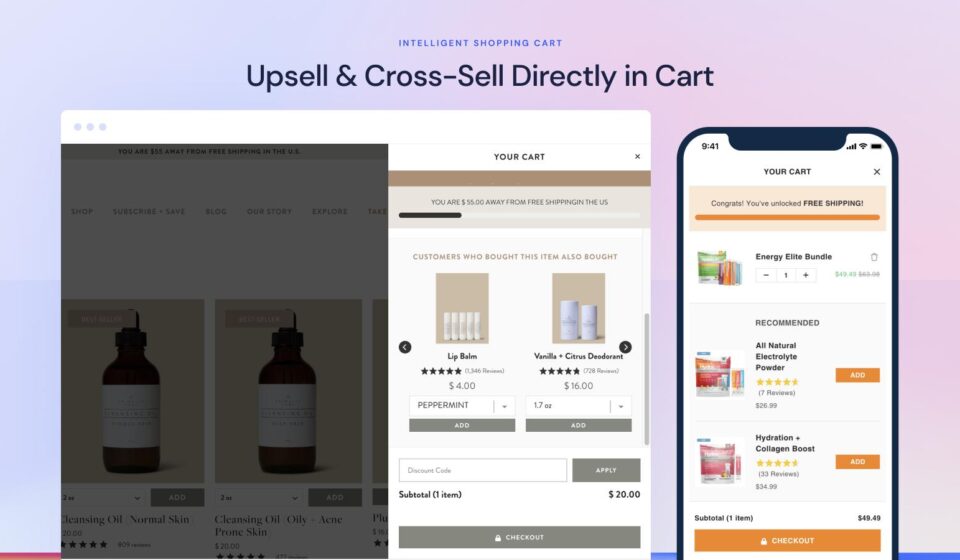

Have you ever wondered why online stores make you buy more? You may add one product to your online shopping cart and then notice several other products recommended before checkout. This is not always random. Online stores use different marketing techniques to encourage customers to buy more, such as upselling, cross-selling, bundles, discounts and product recommendations.
Understanding why online stores make you buy more can help you recognize these marketing techniques while shopping online. These suggestions can be useful when they help you discover relevant products. However, they can also encourage unnecessary spending if you do not compare your actual needs with the suggested products.
By learning why online stores make you buy more, you can make more informed purchasing decisions and avoid buying something simply because a website presents it as a special deal or recommendation.
What Is Upselling?
Upselling means encouraging a customer to purchase a more expensive version of the product they are already considering.
For example, imagine you are looking for a laptop priced at ₹40,000. During your search, the website shows another model for ₹48,000 with more RAM, better storage or a faster processor.
The website is using an upselling strategy.
Upselling does not necessarily mean the more expensive product is better for everyone. The right choice depends on what the customer actually needs.
What Is Cross-Selling?
Cross-selling means suggesting another product that is related to the product you are buying.
For example:
- Laptop → laptop bag
- Smartphone → phone case
- Camera → memory card
- Printer → printer paper
- Keyboard → mouse
Cross-selling can be helpful because customers may need these additional products anyway.
Why Do Online Stores Use These Techniques?
The basic business reason is simple: increase the value of each customer order.
Suppose a customer buys a ₹1,000 product. If the store can sell an additional ₹300 accessory, the total order becomes ₹1,300.
The store does not necessarily need to find a completely new customer to generate that additional sale.
This is why you may see recommendations such as:
- “You may also like”
- “Frequently bought together”
- “Customers also purchased”
- “Upgrade to this model”
- “Complete your setup”
These messages are designed to make relevant products more visible.
What Does “Frequently Bought Together” Mean?
You may have seen a section showing several products together.
For example:
Laptop + Laptop Bag + Wireless Mouse
Instead of making the customer search for every accessory separately, the website presents related products together.
This is a form of cross-selling.
It can save time for customers, but you should still check whether you actually need every suggested item.
Why Free Shipping Can Make You Spend More
Free shipping is another common technique.
Imagine your cart contains products worth ₹450, but free delivery is available only above ₹499.
You may decide to add another ₹100 product to reach the free-shipping threshold.
Your original plan was to spend ₹450. Now you are spending ₹550.
You saved the delivery charge, but your total spending increased by ₹100.
This doesn’t mean free shipping is bad. The important question is:
Would you have bought the additional product without the free-shipping offer?
If the answer is no, the “free shipping” offer may have encouraged an extra purchase.
How Bundle Offers Work
Online stores also combine products into packages.
For example:
Keyboard: ₹800
Mouse: ₹500
Keyboard + Mouse Bundle: ₹1,100
The bundle appears attractive because buying both separately would cost ₹1,300.
However, a discount is useful only when you actually need both products.
A ₹200 saving is not really a saving if you spend ₹1,100 on something you did not need.
What Is Anchor Pricing?
Another technique is anchor pricing.
A website may show:
₹20,000
₹12,999
The original or reference price becomes an “anchor” that influences how you perceive the current price.
Before purchasing, compare the product’s current price with prices from other sellers and consider its specifications, warranty and overall value.
Do not judge a deal only by the percentage discount shown on the screen.
Why Product Recommendations Appear
Online shopping websites can use information such as your searches, browsing activity, previous purchases and the products you are currently viewing to provide recommendations.
For example, if you search for a laptop, you may subsequently see recommendations for:
- Laptop stands
- External keyboards
- Wireless mice
- USB hubs
- Laptop bags
- Monitors
The recommendation may be useful because these products are related to your search.
However, a recommendation is not the same as a requirement.
How to Avoid Unnecessary Purchases
You do not need to avoid every recommendation. Instead, pause before adding an additional product.
Ask yourself:
- Did I plan to buy this product?
- Do I actually need it?
- Is the suggested upgrade useful for my purpose?
- Is the discount available elsewhere?
- Have I compared the final price?
- Do I need the accessory immediately?
- Will I actually use it?
These simple questions can prevent impulse purchases.
A Simple Example
Suppose you want to buy a ₹40,000 laptop.
The website recommends:
| Product | Price |
|---|---|
| Laptop | ₹40,000 |
| Laptop bag | ₹1,200 |
| Wireless mouse | ₹800 |
| Laptop stand | ₹1,500 |
| Extended warranty | ₹2,000 |
Your original requirement was only the laptop.
The website has now presented several additional options.
Instead of automatically accepting every recommendation, decide which products are genuinely useful for your work.
For example, a laptop bag might be useful if you travel frequently, while a laptop stand may be unnecessary if you already have a suitable setup.
Upselling vs Cross-Selling
The difference is easy to remember:
Upselling: Buy a better or more expensive version.
Cross-selling: Buy an additional related product.
For example:
“Would you like the laptop with 16 GB RAM instead of 8 GB?” = Upselling
“Would you like a laptop bag with your laptop?” = Cross-selling
Both techniques can increase the value of an online order.
Can These Techniques Be Useful?
Yes. Upselling and cross-selling are not automatically bad practices.
They can help customers discover products they genuinely need.
For example, someone buying a camera may not know that they need a compatible memory card. A relevant recommendation can save time.
The problem occurs when customers purchase products simply because they are presented as a deal, upgrade or limited opportunity.
The best approach is to compare the recommendation with your actual requirement.
Final Thoughts
Online stores have many ways to encourage customers to increase their cart value. Upselling, cross-selling, bundles, free-shipping thresholds, product recommendations and pricing techniques are common examples.
These techniques can make shopping more convenient, but they can also influence how much you spend.
Before clicking “Buy Now,” take a moment to separate what you need from what the website is simply suggesting.
A good deal is not just about getting a discount. It is about buying something useful at a price you are comfortable paying.
Affiliate Disclosure
Some links in this article may be affiliate links. If you purchase through them, Pijus.in may earn a commission at no additional cost to you. We recommend products based on their relevance to the topic, but you should compare prices, specifications and terms before purchasing.