
A. P. J. Abdul Kalam became President of India in 2002, even though he had never built a conventional political career. The scientist, known as the “Missile Man of India,” reached Rashtrapati Bhavan through decades of scientific work, national recognition and an unusual political decision.
Kalam Was a Scientist, Not a Politician
Born in Rameswaram, Tamil Nadu, in 1931, Kalam studied aeronautical engineering at the Madras Institute of Technology.
He later worked with ISRO and DRDO, becoming an important figure in India’s space and defence programmes.
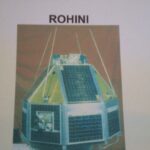
As Project Director of SLV-III, he played a major role in India’s first successful indigenous satellite launch vehicle mission that placed the Rohini satellite into orbit in 1980.
At DRDO, he became closely associated with India’s Integrated Guided Missile Development Programme. His work on missile technology eventually earned him the famous title “Missile Man of India.”
From Scientist to National Figure
Kalam’s influence went beyond laboratories and research centres.
He served as Scientific Adviser to the Government of India and was closely associated with India’s strategic technology programmes. He was also involved in the Pokhran-II nuclear tests in 1998.
In 1997, Kalam received the Bharat Ratna, India’s highest civilian award.
By this time, he was no longer known only as a scientist. He had become a nationally respected figure who represented India’s scientific and technological ambitions.
Why Was Kalam Chosen for President?
In 2002, President K. R. Narayanan’s term was coming to an end.
The BJP-led NDA government, headed by Prime Minister Atal Bihari Vajpayee, decided to nominate Abdul Kalam for the presidency.
The surprising part?
Kalam was not a BJP politician. He was not an MP or MLA. He had never built a conventional political career.
His reputation as a scientist and his popularity among ordinary Indians made him an unusual but widely acceptable choice.
Several political parties, including the Congress, supported his candidature.
Kalam vs. Captain Lakshmi Sahgal
Kalam’s main opponent was Captain Lakshmi Sahgal, a freedom fighter and former officer of the Indian National Army.
The presidential election took place on 15 July 2002.
Kalam won by a huge margin, receiving 9,22,884 electoral votes, compared with 1,07,366 for Lakshmi Sahgal.
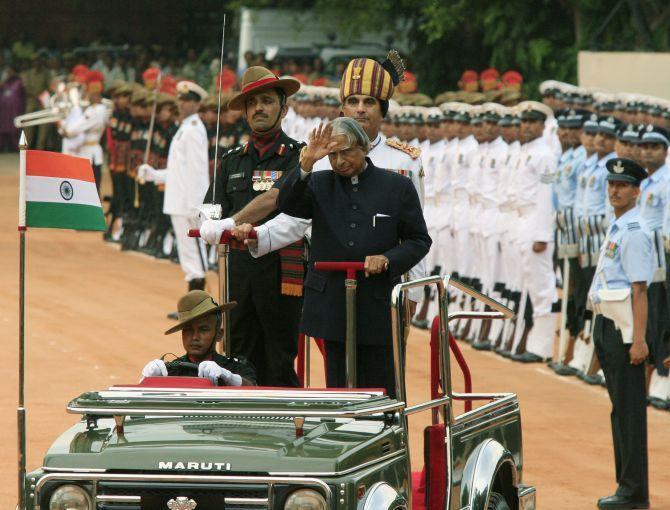
On 25 July 2002, A. P. J. Abdul Kalam became the 11th President of India.
Why Did People Call Him the “People’s President”?
Kalam’s presidency was different from the traditional image of a distant constitutional head.
He frequently interacted with students and young people and spoke about education, science, innovation and India’s future.
His books, including India 2020 and Ignited Minds, also helped establish him as a figure who inspired young Indians to think beyond their circumstances.
The Most Interesting Part of Kalam’s Journey
Kalam did not become President because he first became a politician.
His journey went in the opposite direction:
Scientist → ISRO → DRDO → Missile Man → Scientific Adviser → Bharat Ratna → Presidential candidate → President of India
After completing his presidential term in 2007, Kalam returned to what he loved most—teaching, writing and interacting with students.
That is why his rise to Rashtrapati Bhavan remains one of the most unusual political journeys in modern Indian history.
A scientist entered Rashtrapati Bhavan without building a political career—and became one of India’s most loved Presidents.