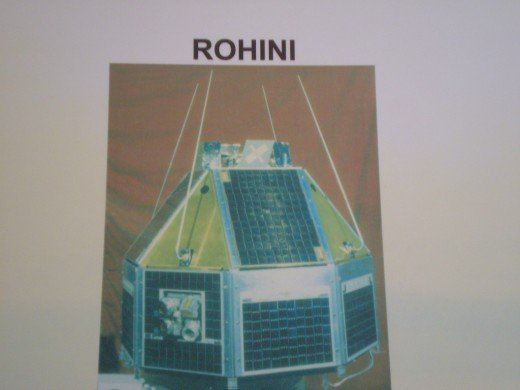

When India successfully launched the Rohini Satellite RS-1 on 18 July 1980, the country achieved something historic. But the most interesting part is not only that India put a satellite into orbit—it is the technology that this small 35 kg spacecraft carried.
RS-1 was an experimental satellite developed by ISRO and launched using India’s SLV-3. It entered an orbit of approximately 305 × 919 km with an inclination of 44.7°.
So, what technology was actually inside it?
1. Digital Sun Sensor
One of RS-1’s important instruments was a digital Sun sensor.
A Sun sensor helps a spacecraft determine the direction of the Sun. This information is useful for understanding the satellite’s orientation in space.
For a small experimental satellite built in India around 1980, having such a sensor was an important step toward developing indigenous spacecraft technology.
2. Magnetometer
RS-1 also carried a magnetometer.
A magnetometer measures the Earth’s magnetic field. In spacecraft technology, magnetic-field information can help engineers understand and determine the spacecraft’s orientation.
This was particularly relevant because RS-1 used spin stabilization rather than the sophisticated three-axis attitude-control systems common on many modern satellites.
3. Temperature Sensors
Spacecraft electronics cannot simply operate like ordinary electronics on Earth.
RS-1 carried temperature sensors to monitor thermal conditions onboard. Temperature information was important for understanding how the spacecraft behaved in the space environment.
4. Spin Stabilization
Here is one of the lesser-known technologies.
RS-1 was spin stabilized.
Instead of constantly using a complex modern attitude-control system, the satellite used rotation to help maintain its orientation. This was a relatively simple and effective approach for a small experimental spacecraft.
5. Only 16 Watts of Power
RS-1 had a power-handling capability of just 16 watts.
That makes its technology even more interesting when compared with modern satellites, which can require much more electrical power.
Engineers therefore had to design the spacecraft’s electronics and instruments around a very limited energy budget.
6. VHF Communication
RS-1 communicated using the VHF band.
The satellite transmitted information back to ground stations, and during the launch phase it successfully telemetered parameters from the fourth stage of the SLV-3 to the ground.
This means Rohini was not simply “sitting in space.” It was helping engineers collect valuable information about India’s new launch vehicle.
7. Aluminium Alloy Structure
The spacecraft structure was made using aluminium alloy.
Using a lightweight metal was important because every kilogram matters when sending a spacecraft into orbit. RS-1 itself weighed only 35 kg.
Why Was Rohini Satellite RS-1 So Important?
The real achievement of RS-1 was bigger than its size.
India had developed the satellite and successfully launched it using the indigenous SLV-3. The SLV-3 was a four-stage, all-solid-propellant rocket capable of carrying around 40 kg into Low Earth Orbit.
The success of SLV-3 and Rohini helped build the technological foundation for India’s later launch vehicles, including ASLV, PSLV and GSLV.
The surprising fact
A satellite weighing only 35 kg, using just 16 watts of power, carried sensors, communication equipment and stabilization technology—and helped India demonstrate that it could launch its own satellite using its own rocket.
Rohini RS-1 was small in size, but enormous in technological importance.
And this early experiment helped lay the groundwork for the much more capable Indian space programme that followed.