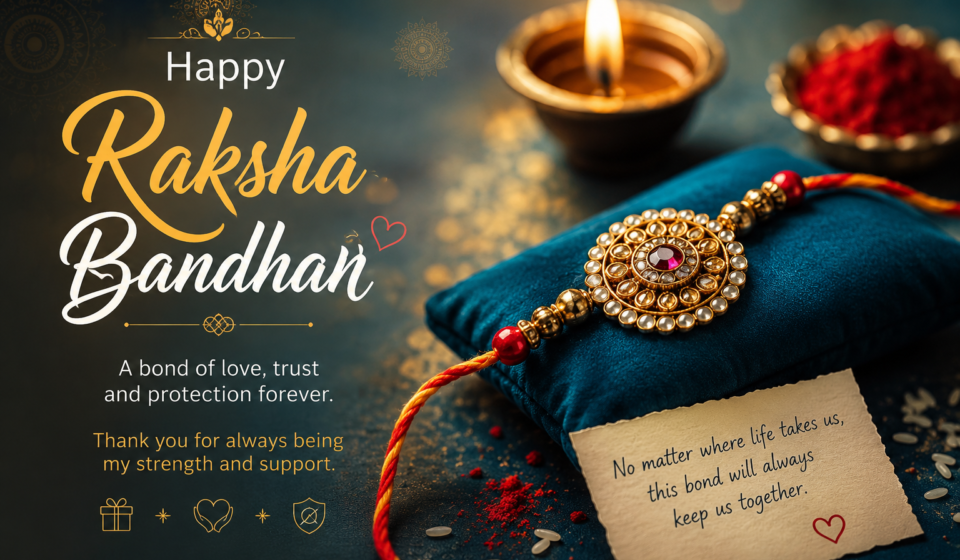

From a Brother-Sister Tradition to a Historic Symbol of Hindu–Muslim Unity During the 1905 Bengal Partition
KOLKATA: Raksha Bandhan, widely known as the festival celebrating the bond between brothers and sisters, has a deeper chapter in India’s modern history. The festival was also used as a symbol of social unity during the 1905 Partition of Bengal, when public opposition to the partition was growing.
What Is Raksha Bandhan?
Raksha Bandhan derives its name from “Raksha,” meaning protection, and “Bandhan,” meaning bond. Traditionally, sisters tie a rakhi around their brothers’ wrists and pray for their well-being, while brothers express their commitment to support and protect them.
Over time, the festival has come to represent broader ideas of love, solidarity and social bonding.
Rabindranath Tagore’s Role
During the anti-Partition movement in 1905, Rabindranath Tagore promoted Raksha Bandhan as a public expression of unity.
Rakhi ceremonies brought Hindus and Muslims together, turning the traditional thread into a symbol of friendship and solidarity. The message was significant at a time when the partition of Bengal had created deep political and social tensions.
Why Is This History Important?
The 1905 observance gave Raksha Bandhan a meaning beyond family relationships. It demonstrated how a familiar cultural tradition could also be used to communicate a message of communal harmony and unity.
Today, the festival remains widely celebrated across India. Its historical connection with Tagore and the anti-Partition movement adds another important dimension to the story of Raksha Bandhan.
Raksha Bandhan 2026
As families celebrate Raksha Bandhan in 2026, the festival continues to carry both a personal and historical message: relationships are strengthened through trust, protection, respect and unity.